Gait analysis of patients with osteoarthritis of the knee using orthotic shoes
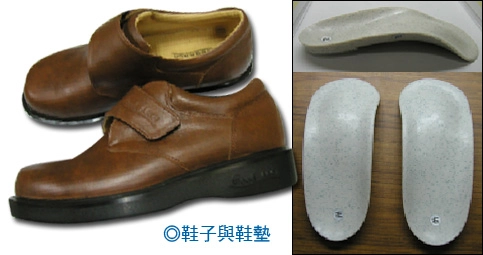
Patients with osteoarthritis of the knee often experience symptoms such as joint stiffness, pain, and reduced range of motion; in severe cases, these symptoms can even affect their daily living functions and quality of life. Flat feet commonly lead to complications such as chronic foot muscle strains, tendinitis, plantar fasciitis, and metatarsalgia. Many domestic and international studies have indicated that functional insoles are effective in improving the condition of patients with flat feet and osteoarthritis of the knee, but the impact of insoles on the entire gait cycle is not well understood. Therefore, this study used a three-dimensional motion analysis system and force plates to collect biomechanical data on the gait cycle of these patients in three conditions: barefoot, wearing shoes, and wearing shoes with insoles. The study compared and explored the impact of an appropriate insole on the gait of patients with flat feet and osteoarthritis of the knee, determined the effectiveness of the insole, and further investigated the mechanism as an important reference for future improvement or development.
Gait analysis of patients undergoing Achilles tendon reconstruction
A composite anterolateral thigh flap provides the soft tissue and vascularized myofascia for Achilles tendon reconstruction. This flap can replace the function of the Achilles tendon, and its associated blood vessels are sufficient to supply blood to the reconstructed tendon. These functions of the flap contribute to a higher success rate and better prognosis for Achilles tendon reconstruction.
However, while this reconstruction method increases the success rate, it also increases the risk of quadriceps muscle injury due to flap acquisition and may even affect knee joint stability. Therefore, this study aims to investigate the different effects of using a composite anterolateral thigh flap for Achilles tendon reconstruction on the gait of the flap-acquired lower limb and the reconstructed lower limb, providing a basis for clinical assessment and reference.
Analysis of lower limb biomechanics of male and female athletes performing lateral shuttle runs
Lateral shuttle runs are a common warm-up and agility training method for many athletes, especially basketball, handball, and soccer players. Because they must constantly dodge opponents' blocks to launch attacks, rapid lateral movement is a crucial movement skill during matches. However, lateral shuttle runs require rapid deceleration and changes of direction, making them prone to anterior cruciate ligament (ACL) injuries. Studies have found that female athletes are more susceptible to ACL injuries than male athletes. While lateral shuttle runs are frequently used for training and warm-ups, current research largely focuses on cardiorespiratory capacity and neglects the biomechanical characteristics of the movement itself. Therefore, this study utilizes a three-dimensional motion analysis system and force plates to collect and evaluate the kinematic and dynamic results of male and female athletes during rapid lateral shuttle runs. The analysis examines the differences in joint angles, joint forces, and other biomechanical characteristics between male and female athletes, providing athletes and coaches with guidance for designing training programs to prevent injuries.
Lower limb biomechanical characteristics assessment using a new type of stair climber
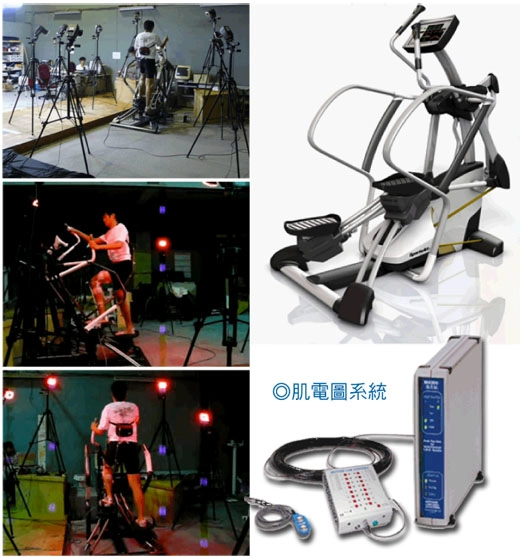
Stair climbers are a common indoor exercise tool, frequently used by trainers and therapists in gyms and rehabilitation centers for strength and cardiovascular endurance training. They primarily enhance the strength of the quadriceps muscles in the lower limbs and have a significant effect on improving cardiovascular endurance. Furthermore, because stair climbing is a closed-chain exercise, it reduces joint impact, making it suitable for those with knee injuries or degeneration. However, most commercially available stair climbers only offer sagittal plane movement, primarily lower limb flexion and extension, with few incorporating other planar movements. Newer stair climbers mainly provide coronal plane movement. Given the need to understand the safety and effectiveness of new exercise equipment, this study utilizes a three-dimensional motion analysis system, a six-axis weight cell, and an electromyography system to assess lower limb biomechanics and muscle activation under different conditions, providing a reference for developing training methods and equipment.