The relationship between lower limb injuries and muscle activation response and balance ability in b
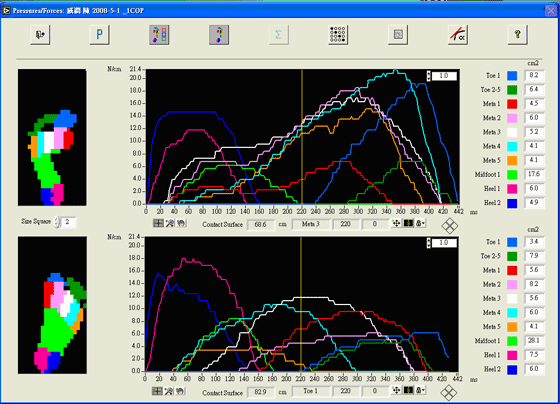
Of all ballet-related injuries, ankle and foot injuries account for approximately 35%–55%. Previous studies have found that injured dancers may have good single-leg balance but lack satisfactory ballet-specific techniques. This study used motion analysis, foot pressure plates, and electromyography to explore the relationship between balance ability, jumping movements, and prior injury history based on participants' performance of classical ballet basic movements (first and fifth positions, toe-tip, straddle jump, and crane pose). The results showed a high correlation between dancers' ankle injury history and medial and lateral balance; therefore, it is recommended that dancers undergo muscle and balance control training based on specific ballet movements.
Measurement of the medial arch of children aged 3-6 years
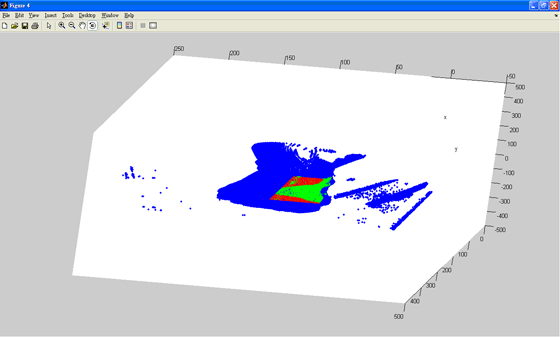
There are many causes of lower limb injuries, among which excessively high or low medial arches are considered a contributing factor. Current methods for assessing medial arches are all two-dimensional measurements. One objective of this study is to construct a three-dimensional foot model using two digital cameras and mirror reflection, and then measure the development of the medial arch in children aged 3-6 years using a three-dimensional description method. A second objective is to explore the relationship between the height of the medial arch and the distribution of plantar pressure and lower limb joint stress during walking. The research results will allow us to better understand the development process of children's arches and the role they play during walking.