This research team conducted a comprehensive study of trigger finger from the perspectives of biomechanics, medical imaging processing, clinical treatment, and rehabilitation medicine. Trigger finger is a common hand disorder characterized by uneven and painful finger movements. In more severe cases, the finger may become stuck and make a clicking sound when straightening, or even remain in a bent position, unable to straighten, resembling the action of pulling a trigger, hence the name. Regarding the effectiveness of surgical treatment, some patients with trigger finger are still dissatisfied with the results. Furthermore, research on histopathology, biomechanics, and imaging evaluation is still lacking. Clinical evidence is insufficient regarding its etiology, classification, prevention, conservative treatment, surgical techniques, and prognosis. Therefore, this team initiated an integrated research project on trigger finger.
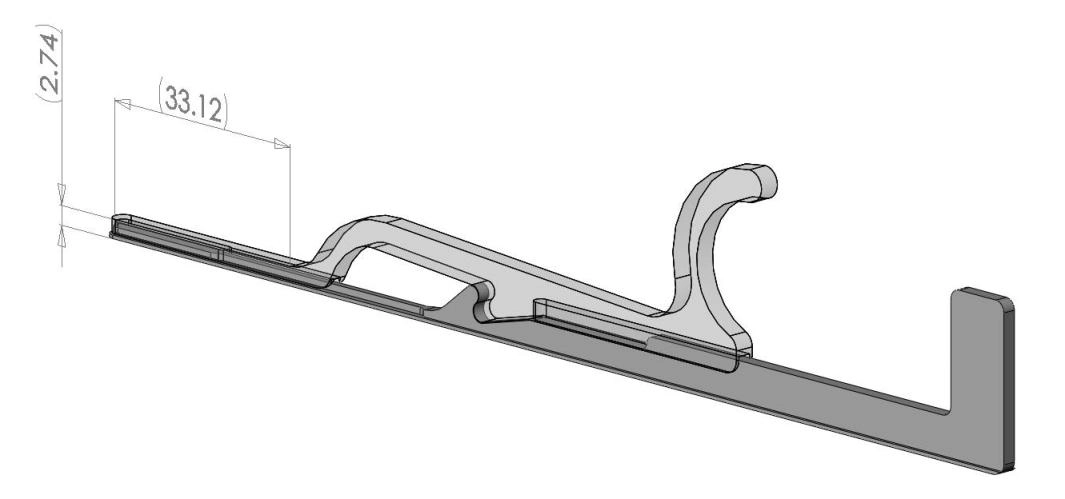
Due to surgical needs and the promotion of minimally invasive orthopedic techniques, our team designed a set of surgical instruments suitable for minimally invasive trigger finger surgery. Besides addressing the issue of poor clinical treatment outcomes through minimally invasive concepts and specially designed instruments, it also allows for the complete removal of the annular tendon sheath using specialized instruments, facilitating histological examination and medical imaging analysis. Furthermore, through biomechanical and hand functional assessments, long-term prognostic follow-up of patients is conducted, exploring the effectiveness of rehabilitation interventions for patients with more severe disease progression. In addition, our team uses cadaveric human hand samples to investigate the characteristics of the annular tendon sheath and flexor tendons from a mechanical and material property perspective, integrating this information with clinical assessment and imaging analysis results to explore the etiology and assist in future clinical diagnosis and intervention. Our team has also established a biomechanical model of the hand based on the mechanical, imaging and clinical parameters obtained in previous studies for future hand research. We have also developed an "integrated trigger finger percutaneous dissection surgery simulation training system" to create a virtual surgical training system. This training system will allow more surgeons to practice and become familiar with the operation of minimally invasive surgical techniques, thereby improving the quality of clinical medical care.
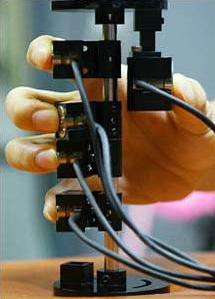
Hand Functional Assessment Tool
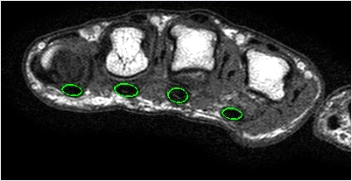
Image analysis